Trusting the Process: Steven Parella Finds His Path in Pharmacy
Trusting the Process: Steven Parella Finds His Path in Pharmacy
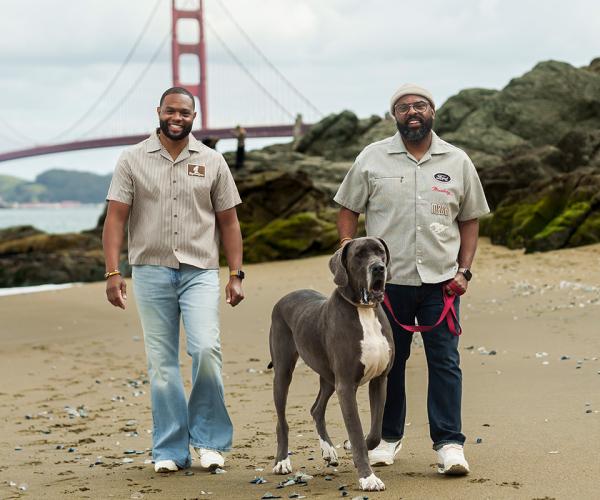
A few days after his grandmother's funeral, Steven Parella, PharmD '19, walked into his first class at UCSF.
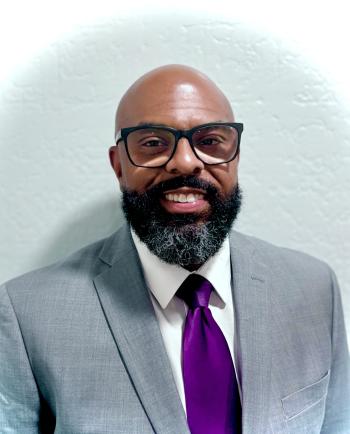
It wasn’t how he had expected to begin a career in pharmacy. Parella was living in Atlanta when his grandmother was diagnosed with cancer and came to UCSF for treatment. While visiting her in the hospital, he started looking into post-baccalaureate programs at UCSF and contacted the UCSF School of Pharmacy.
The program had already started, and Parella was told he could apply the following year. Then, unexpectedly, the coordinator called him back stating that something about his background resonated during the conversation.
He sent his academic information, returned to San Francisco for his grandmother’s funeral, and met with the program coordinator. A few days later, he attended his first class.
“It was a divine intervention,” he said.
From there, the path from the UCSF School of Pharmacy’s Post-Baccalaureate Program to the PharmD program, residency, and his current career unfolded quickly.
Today, Parella is a clinical pain pharmacist with Kaiser Permanente in Roseville, CA. He manages the Opioid Safety Tapering Program, conducting telephone consultations with patients taking high-dose opioids and gradually tapering their medications while introducing non-opioid treatments for additional pain relief. He also provides coverage for a hospice clinic one day a week.
His work reflects what he discovered during his training: He wanted a career centered on direct patient care, education, and medication management.
Discovering the breadth of pharmacy
When Parella arrived at UCSF, his rotations through inpatient care, emergency medicine, cardiovascular care, and ambulatory care exposed him to different disease states and clinical opportunities.
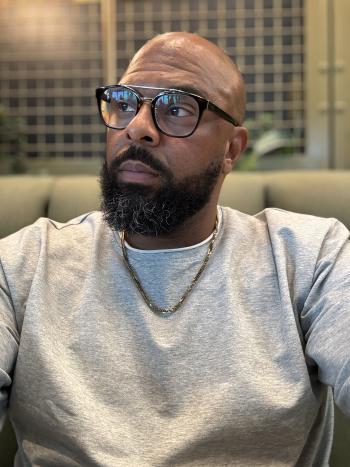
“My rotations helped me discover which areas of pharmacy interested me most,” he said. “My residency at Kaiser Permanente, which focused on inpatient and ambulatory care, further solidified my passion for direct patient care and education.”
Ambulatory care, in particular, gave Parella the opportunity to build relationships with patients over time.
“I like to follow my patients and educate my patients and see it go from point A to point Z,” he said. “I like to see their growth, and hopefully the reduction of signs and symptoms”
Today, about 90% of his work is directly with patients.
One patient was using high-dose fentanyl patches, approximately 100 micrograms per hour, to manage chronic pain. Over several months, Parella tapered the medication while introducing non-opioid treatments.
At the end of the taper, the patient told him how much better she felt since stopping opioids with better pain management.
The experience reinforced for Parella how thoughtful medication management can improve a patient’s quality of life.
Opening the door through representation
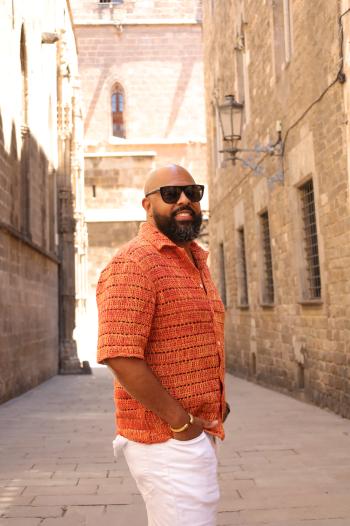
Parella’s understanding of pharmacy changed significantly during his training. What began as an exploration of career options became a deeper appreciation for the ways pharmacists contribute to patient care through medication safety, education, and individualized treatment.
“I remember just trying to become the most relatable health care professional possible,” he said.
For Parella, being relatable means understanding where patients are coming from and taking their experiences into account when developing treatment. He connects that approach to the history of the Tuskegee experiment and distrust among some African American patients toward health care professionals.
He has also experienced the importance of representation firsthand.
“Every African American person I treat or consult, they say, ‘Good job,’ or, they smile and say ‘I'm glad to see you,’ ” he said.
For Parella, that opening creates an opportunity to build trust through education.
“So now you have to continue to open up that door and educate as much as possible for them to understand...yes, this happened in the past. It's not a myth. Medications do work, but let me tell you how they work, and let me show you how they can work.”
Giving back to the next generation
Parella credits Executive Vice Dean Sharon Youmans, PharmD ’85, MPH, and alumna Maria Lopez, PharmD ’01, with helping shape his path from student to pharmacist.
Youmans supported him from his post-baccalaureate studies through pharmacy school, residency, and his career. Lopez gave him his first pharmacist job as an intern. Both mentors have continued to influence his professional life.
Their influence also helped keep him connected to UCSF. Parella now serves on the Pharmacy Alumni Association Board, where he hopes to give back to the institution that helped shape his career and support future pharmacists.
That sense of responsibility—to patients, to the profession, and to the next generation—runs through Parella’s story.
And when he thinks about what he would tell himself on his first day at UCSF, his advice is simple.
“I would tell myself to trust the process,” he said. “Every personal, educational, and professional experience is preparing you for where you are meant to be. Take it one step at a time, stay committed to your goals, and trust that you will get there.”
For Parella, that process led to a career he once could not have imagined—and to a broader understanding of what pharmacists contribute to health care.
On World Pharmacists Day, that evolution is worth celebrating.
“We should celebrate how pharmacy continues to evolve beyond dispensing medications,” Parella wrote. “Pharmacists are increasingly recognized as essential health care providers who help patients manage medications, prevent disease, and improve health outcomes. Most importantly, we celebrate the trust patients place in us and the meaningful impact we have on their care."